
A Genius And Visionary Nicola Tesla
Published:
Nikola Tesla is one of those historical figures whose real achievements are impressive enough without adding legends. He was born in 1856 in Smiljan, in what is now Croatia, and moved to the United States in 1884. His work in electrical engineering became especially important during the development of alternating-current power systems.
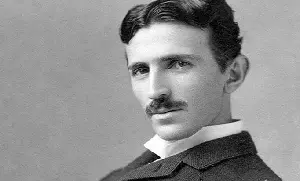
The AC induction motor and the War of Currents
Tesla’s most consequential practical invention was the AC induction motor, patented in May 1888 (US Patent No. 381,968). The motor used a rotating magnetic field created by multi-phase alternating current to drive a rotor without brushes or commutators — the components that wore out and caused maintenance problems in DC motors. George Westinghouse, who had been building an AC power distribution network, saw the potential immediately and paid Tesla $60,000 for his AC patents plus a royalty arrangement.
This acquisition placed Tesla’s inventions at the centre of the War of Currents: the competition between Westinghouse’s AC system and Thomas Edison’s established DC infrastructure. Edison argued that AC was too dangerous at the voltages needed for long-distance transmission. Westinghouse and Tesla’s answer came in 1893 at the World’s Columbian Exposition in Chicago, where they powered the entire fairground with AC electricity — 100,000 incandescent lamps — demonstrating its practicality on a scale that ended the serious debate. Two years later, in 1895, the Adams Power Plant at Niagara Falls began commercial operation, transmitting AC electricity to Buffalo, New York, 26 miles away. It was the first major long-distance AC generation station and showed that AC could power cities.
This period is often simplified as Tesla against Edison, but history is more complicated. Many engineers, companies, investors, and inventors were involved. Still, Tesla became one of the strongest symbols of the AC system that now powers nearly every electrical grid in the world.
The Tesla coil and wireless experiments
Another invention strongly connected with his name is the Tesla coil, developed in 1891. It uses a resonant transformer circuit to produce very high-voltage, high-frequency alternating currents. Tesla used it in spectacular public demonstrations — showing it could wirelessly illuminate incandescent bulbs at a distance — and saw it as a building block for wireless power transmission.
His most ambitious attempt to realise this vision was the Wardenclyffe Tower project, begun in 1901 on Long Island with funding from financier J. P. Morgan. Tesla intended to demonstrate wireless transmission of power and communication across the Atlantic. The project ran into funding problems, Morgan withdrew his support after Guglielmo Marconi successfully sent a radio signal across the Atlantic in 1901, and construction was never completed. The tower was demolished in 1917. Tesla had imagined a world of free wireless energy; what he built became a financial disaster.
The engineer behind the mythology
Tesla’s personal life also became part of his legend: unusual habits, a reportedly photographic memory, intense working routines, and aversions to certain textures and objects. Stories about his laboratory in Colorado Springs, where he claimed to have generated ball lightning, and demonstrations for visitors including Mark Twain, helped create the image of the eccentric genius. But I prefer remembering the engineer behind the mythology.
His life was not a story of a misunderstood genius defeating everyone around him. He had genuine successes — the AC motor, the polyphase transformer system, contributions to early radio technology — alongside failed projects, financial difficulties, and ideas that never became workable systems. That combination makes his story more human. Real creativity is rarely a straight line. Tesla’s legacy survives because his AC system became the foundation of the electrical world we still live in. That is more remarkable than any myth.