
Age of Empires II
Published:
Age of Empires II is one of those games that can easily steal an evening from me. I start with the idea of playing for a short time, but there is always one more building to finish, one more technology to research, or one more attack to prepare. It was released in 1999 and is set mainly in the Middle Ages. The basic idea sounds simple: collect resources, build a civilization, train an army, and defeat your opponents. In practice, every match becomes a small story.
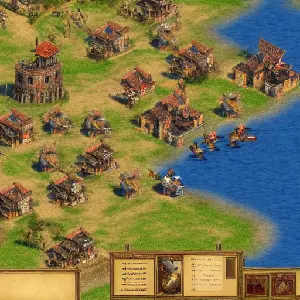
What makes the game special for me is the balance between economy and war. A large army looks impressive, but it cannot survive without food, wood, gold, and stone. If I spend too much on soldiers, my economy becomes weak. If I focus only on gathering resources, an opponent may attack before I am ready. The game constantly asks me to choose between safety, growth, and risk.
The civilizations also make the game interesting. Byzantines are usually comfortable for defensive play. Franks are strong when cavalry becomes important. Goths can create large infantry armies, while Mongols are dangerous with fast mounted units. Vikings feel very different on water maps. Turks can become powerful when gunpowder units enter the game. These differences encourage me to change my plan instead of repeating the same strategy every time.
I have learned that the beginning of the game is especially important. A strong economy in the first ages gives more choices later. Villagers should not stay idle for long, and resources should be gathered with a purpose. If I know that I want to use cavalry, I need enough food and gold. If I expect a long defensive game, stone and good building placement become more important.
Scouting is another small part of the game that has a large effect. Sending the scout around the map can reveal resources, enemy buildings, and possible attack routes. Knowing what the opponent is doing often matters more than having a larger army. If I see an early barracks or stable, I can prepare before the attack arrives. If the enemy is playing slowly, I may have time to expand.
I also like how the terrain changes decisions. High ground, forests, narrow passages, and water can completely change a battle. On Arabia, there is usually more open space and early pressure feels dangerous. Black Forest creates narrow paths and often leads to long defensive games. Coastal maps make ships important. Nomad feels very different because players begin without a normal town position and must first create order from uncertainty.
Hotkeys are another small detail that makes a big difference. At first, clicking everything with the mouse feels natural. Later, using keys to select buildings or create units makes the game much faster. It is one of those skills that seems unnecessary until you become used to it. Then going back feels slow.
The most important lesson for me is flexibility. A plan is useful, but a plan should not become a prison. Sometimes I prepare for cavalry and discover that the opponent has built the perfect counter. Sometimes I want to attack early but the map gives me a safer defensive position. Good players seem to notice these changes quickly.
Maybe this is why I still enjoy Age of Empires II. It is not only about clicking fast. It rewards observation, planning, timing, and adaptation. Every match begins with a few villagers and an empty map, but a short time later there are towns, armies, walls, and small decisions everywhere.
And when the game ends, I almost always think of one thing I could have done differently.